
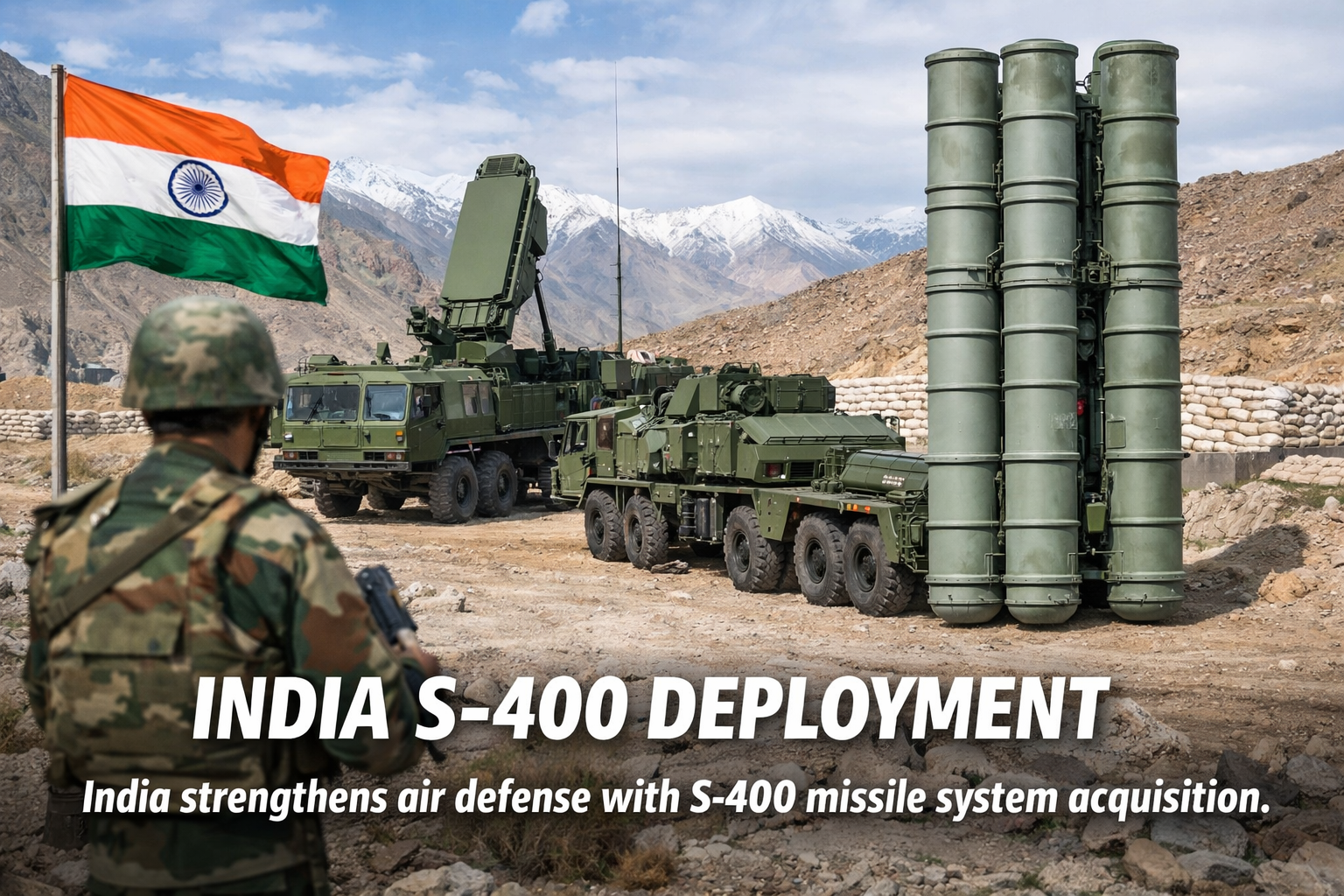
The purchase of the S-400 Triumf missile system by India is significant in advancing the Indian defense systems. The deal signed in October 2018 consists of five advanced regiments that will be able to intercept aircraft, drones, cruise, and ballistic missiles over a distance of up to 400 km. The acquisition boosts the aerial defense system of India and is an indication of the strategic freedom of the country, improving its capacity to react well to the security needs in the region.
Purchase and Delivery Schedule
The contract was signed to meet the long-range air defense requirement of India with a value of 5.43 billion dollars as the S-400 contract. India put national security first even though it was under CAATSA sanctions by the pressure of the United States. The initial three regiments would be provided in the period 2021-2023 and be stationed along the northern and western boundaries and be integrated with the already existing radar and missile systems. The other two regiments will be adopted in 2026, one in mid-year and the last system at the end of the year. This gradual deployment will provide a seamless integration process and time to train the staff and consolidate India’s layered air defense system in layers.
Technical Features of the S-400
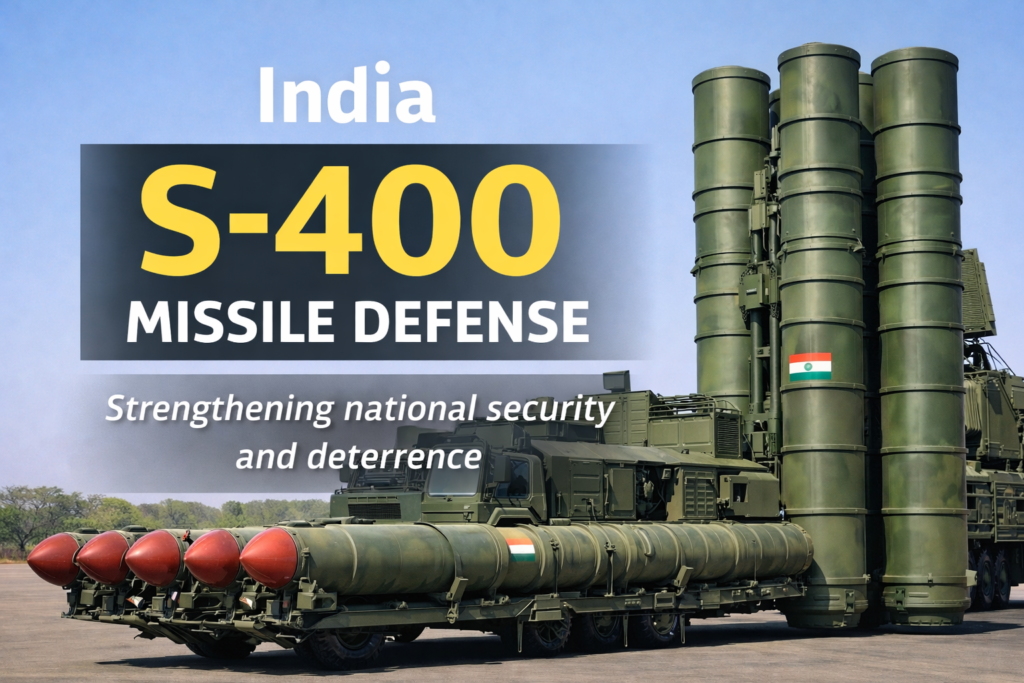
The S-400 missile system is a high-tech weapon, which is mobile and automated, as well as precise. Its characteristics include an extension of up to 400 km for interception, various types of missiles, the ability to engage various threats, use of advanced radar systems that are able to monitor a number of targets at the same time, and mobility so that it may be deployed quickly. Human error is minimized in automated command and control and also speeds up response time. The S-400, together with the indigenous systems of India such as Akash and MRSAM, will create a layered defense network that will offer a complete defense against the modern aerial threats; hence, the airspace of the country is safe.
Strategic Importance
The S-400 system goes a long way in improving the deterrence capacity of India. It serves as a defensive layer around critical infrastructure and key military installations to enable a quick response in a situation where high-intensity conflict is taking place. Its use supplements national defense programs in place and shows that India has strategic independence, which strengthens the credibility of this country in the area. Having the S-400 in position, India has a plausible high-intensity range defense stance on the aerial assault by its immediate neighbors, reinventing its complete defense preparedness.
Key Advantages
- Long-range coverage: Covers the northwest and the west.
- Multi-target engagement: It is able to intercept aircraft, drones, and missiles.
- System integration: Integrates with Akash and MRSAM.
- Mobility and automation: Faster deployment and human error.
- Strategic independence: Enhances the autonomy of the decision-making of defense.
International Relations
The purchase of the S-400 enhances the defense relations between India and Russia, and it indicates its ability to make its own decisions regarding defense purchases. It promotes the credibility of India as a power in the region and helps in creating stability in the region by discouraging its potential enemies. The system is also a reassurance to the allies, and it reinforces the role of India in the security issues of the South Asian region, which points to the long-term strategic planning and defense preparedness of the country.
Problems and Reflections
The S-400 acquisition, despite its merits, has had its difficulties. There was a delay problem in delivery because there were global logistics problems and geopolitical tensions, including international transport and production problems. The need to integrate with existing defense infrastructure requires special training in order to make it efficient. There were also diplomatic pressures from the world states, especially the U.S. India countered these obstacles by using gradual implementation, training of personnel, and optional indigenous defense schemes, which guaranteed that the S-400 was fully functional and efficient.
Conclusion
To sum up, the S-400 missile complex of India is a significant addition to the air defense of India and air deterrence in the country. The system offers a long-range interception capability, a variety of missiles, radar tracking, and mobility with the initial deliveries of 2021–2023 and final deliveries of 2026. The S-400 is intertwined with native systems to form a layered air defense system that is able to counter various threats. With all five regiments deployed, the defense shield will be world-class, and this will protect the airspace of India and will offer increased strategic autonomy and regional influence to India decades into the future.
Frequently Asked Questions (Q&A)
Question 1: When was the S-400 deal signed by India, and how many regiments will be a part of this deal?
India signed the agreement in October of 2018 to obtain five regiments of Russian ones.
Question 2: What is the total number of S-400 regiments currently active, and when are the rest on their way?
Three regiments have been shipped 2021–2023 and are already operational. The other two will be in 2026, one in the middle of the year and the final one at the end of the year.
Question 3: What is the strategy value of the S-400 to India?
It offers long-range air-domain defense and enhances deterrence, as well as provides layered defense and is compatible with the other defense infrastructure of India.
Question 4: What are the key technical characteristics of the S-400?
It is long-range intercepting, multimissile, high-tech radar-guided, mobile, and computerized command and control.
Question 5: What were some of the challenges that India encountered in this purchase?
Delays in delivery, integration difficulties, and diplomatic concerns were some of the challenges, which were offset by staged deployment, training, and complementary indigenous systems.