
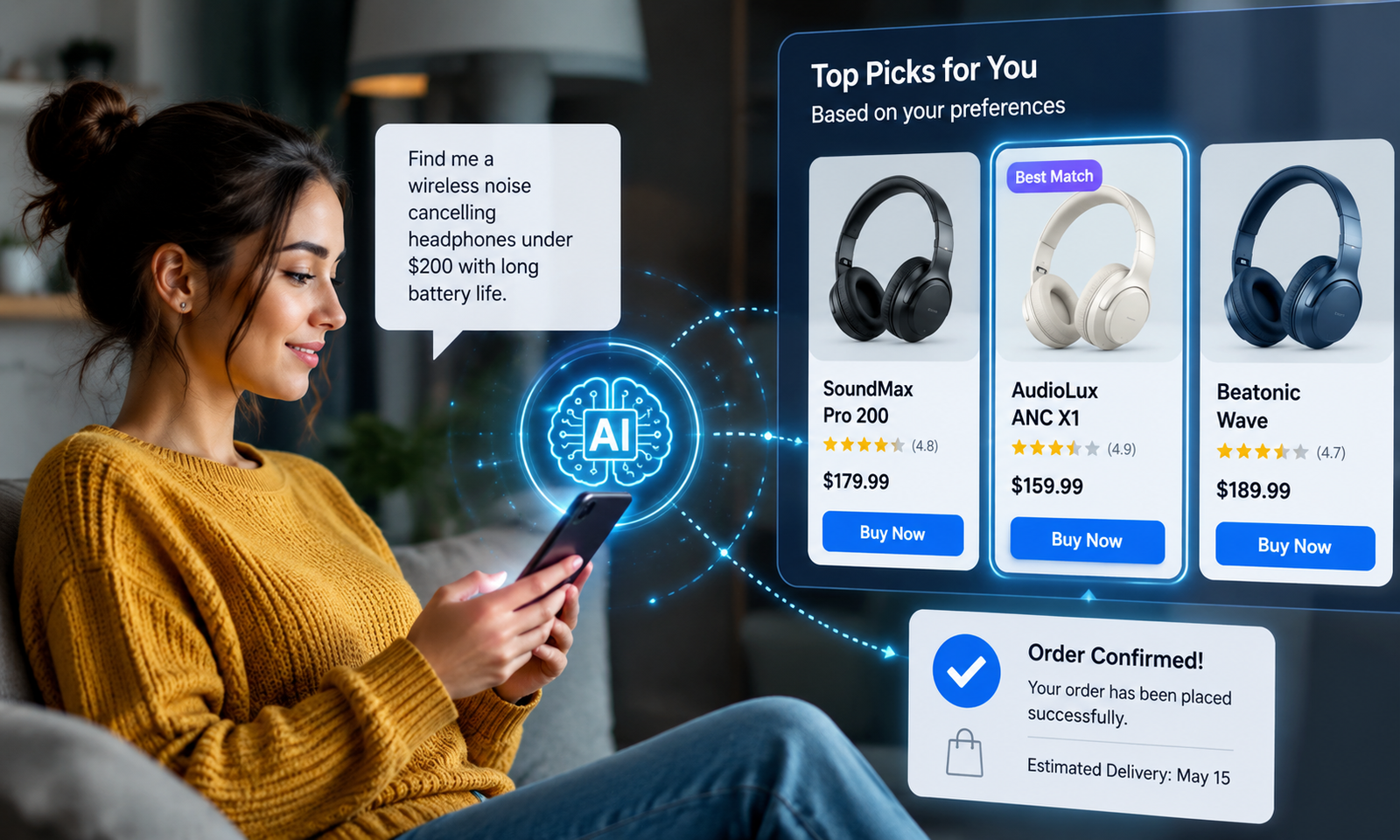
Artificial Intelligence is increasingly becoming a part and parcel of the ecommerce platforms of 2026 and the ecommerce shopping world is evolving rapidly. Consumers don’t have to spend hours looking through a number of websites, comparing products by hand or reading through a tonne of reviews. However, the time for manually recommending products has passed, as AI-powered assistants can now make product suggestions in real-time, based on user preferences, past purchases, budget, and current shopping habits.
AI Shopping Recommendations: The influence on consumer behavior.
AI is transforming shopping to become easier, faster and more personal. AI-driven recommendations are highly relevant and can sift through vast amounts of data to give consumers highly relevant product suggestions within seconds leading to increased consumer trust of such recommendations. The users are now communicating with AI assistants in a natural way via chat or voice commands, eliminating the need to enter several searches and open multiple tabs.
Customized shopping experience
AI-driven shopping platforms provide extremely personalised suggestions, based on each customer’s shopping habits. These systems capture the interests of users, their browsing patterns, buying history as well as the engagement of the product and process this information to understand what shoppers are most likely to purchase. If the consumer frequently buys fitness items, then they might be able to get recommendations for supplements, fitness equipment or smart wearables, whereas those who are more focused on fashion could get recommendations for the latest fashion or accessories according to their fashion sense.
More straightforward purchasing process.
A key factor driving consumers’ adoption of AI-powered shopping is the speed at which it works. The AI systems streamline the entire shopping experience, making comparisons, summarizing customer reviews, analyzing prices, and more in seconds. This eliminates the necessity to do a lot of research on the part of the shoppers before making their purchase.
AI systems are increasingly gaining consumers’ trust in decision-making because of their convenience and efficiency.Consumers are getting used to letting AI systems make decisions for them as it is convenient and efficient. When a customer clicks on a search result, AI assistants can help to present the most relevant products, instead of thousands of options, to minimize decision fatigue. This has led to a reduction in customer’s purchasing time.
The Voice Commerce segment is growing.
With the advancements in smart speakers and voice assistants, voice-ordered shopping has become more and more commonplace. With natural voice search, consumers can now order over-the-shelf products, reorder their previous orders, or seek AI assistance in making recommendations. Hands-free shopping comes in handy, particularly for those who are busy, and looking for product ideas.
Shopping is also more conversational and interactive, through voice commerce. Users don’t need to use search engines to enter search terms, but can type in detailed questions such as you might do in a conversation. AI assistants respond with personalized recommendations, resulting in a smoother and more natural ecommerce experience that leads to direct sales on AI platforms.
- AI takes the time to do product research manually.AI saves the time of manual product research.
- Customized recommendations make shopping more convenient.
- Voice assistants help in catching the product to be discovered.Voice assistants make products easier to discover.
- AI-generated comparisons and reviews are trusted by consumers.
- Faster checkout increases online purchase activity
Why Brands Are Optimizing for AI-Powered Shopping Platforms
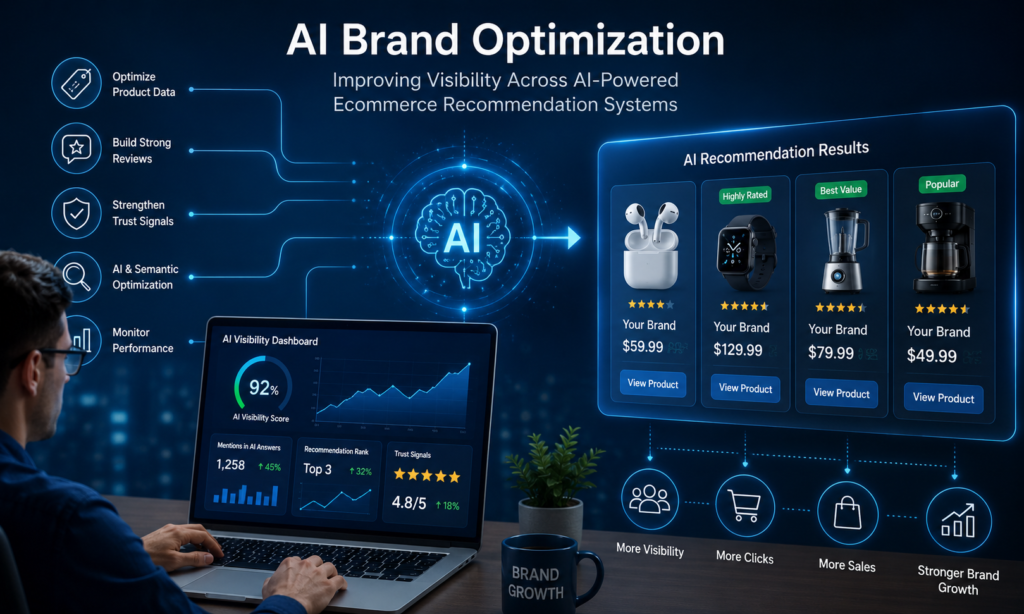
With an increasing shift towards AI-powered shopping, marketers and ecommerce teams are adapting their marketing strategies. Personalized AI systems are initiating a shift in website traffic, making it less relevant as many consumers are finding and buying products directly from the AI. To ensure brands are known and accepted within the AI recommendation platforms, brands need to be visible and trusted.
Structured product information, customer reviews and brand authority are among the key areas of focus for companies, as are AI optimization methods. Companies which don’t adapt will have difficulty showing up in AI-powered shopping suggestions in the future ecommerce marketplace.
The significance of AI visibility is growing, even more than website traffic.
Typically, the emphasis in the ecommerce world was on getting as much traffic as possible to the website using SEO, ads and social media marketing. But, the shopping platform with the help of Artificial Intelligence is transforming this model. With the rise of AI, consumers now more often than not are looking at the AI-driven recommendations rather than eCommerce websites themselves.
Reviews and Trust Signals are More Important!
AI systems scan customer reviews and ratings, shipping reliability and return policies, along with brand reputation to make product recommendations. Positive trust signals greatly impact the likelihood of getting products in AI-driven shopping suggestions.
Conversational Commerce Is on the Rise.
Conversational commerce enables the adoption of natural conversations with AI assistants, chatbots and voice commands to shop. With a rise in the number of people who are shopping online, they are no longer searching with keywords but are now asking queries related to shopping, like “What is the best budget gaming laptop for students?” or “Which smartwatch has the longest battery life?”
To see how this is affecting businesses when creating ecommerce content and product descriptions, you’ll need to watch closely.You’ll have to pay attention to see how businesses are adapting their approach to content and product descriptions for ecommerce. Brands now need to be more optimized for conversational search behaviour, offering more information that is user-centric, and AI can comprehend and suggest it correctly.
- AI optimization of products is the key to businesses’ capacity to be visible.Businesses are leveraging AI to optimize products for visibility.
- The ratings from customers impact AI product recommendations.The reviews from customers have an impact on AI product recommendations.
- The way people search is changing!People are changing their search method for keywords to conversational search!
- As AI platforms become more and more popular, they will prioritize trusted and reliable brands.
- Gone are the days of focusing on ecommerce strategies, as it now goes about AI-powered discovery.
What Lies Ahead for AI-powered eCommerce?
As AI technology advances, it will increase the automation of the ecommerce industry even more. In the future, AI-powered shopping assistants could handle all aspects of the shopping journey, from product recommendations to price comparisons, checkout, tracking order deliveries, and even customer support. In the future, consumers might be able to automatically tell an AI system what they want to purchase, given the convenience of doing so.In the future, consumers could even put in an order to purchase something and let AI do the job.
Conclusion
With AI recommendations, consumers are more likely to buy products straight from the AI’s recommendation than from traditional ecommerce sites. In 2026, the way people shop online is changing, with faster shopping times and personalized recommendations, conversational commerce, and voice powered assistants.
Common Questions (FAQs)
1. What is driving consumers’ purchases of products directly from AI recommendations?
Consumers opt for AI recommendations as they save their time, offer them personalized recommendations, compare products in seconds and just ease the overall shopping process for them without having to visit multiple websites.
2. What is the engine that is used for recommending products to users by AI?
AI algorithms are used to process customer data, such as interests, customer reviews, and pricing preferences, as well as browsing history and previous purchases, and make product recommendations that align with each customer’s preferences.
3. AI Ecommerce is simply a form of eCommerce that utilizes AI technology.
AI-powered ecommerce is online shopping platforms that leverage AI technology to better match product suggestions with their users, to support customers through automated assistance, to aid with the discovery of products, and to streamline the entire buying process.
4. What is driving a shift in focus for brands to the AI shopping platforms?
As consumers are increasingly finding and buying products via AI-powered assistants over traditional ecommerce platforms, brands are tuning in for the advantages these AI shopping platforms can offer.
5. Why are consumers safe with AI Shopping?
While AI-powered shopping is safe overall, it’s important for consumers to be aware of and read the product details, privacy policies and recommendations to prevent being misled or having products recommended that are sponsored rather than their own.