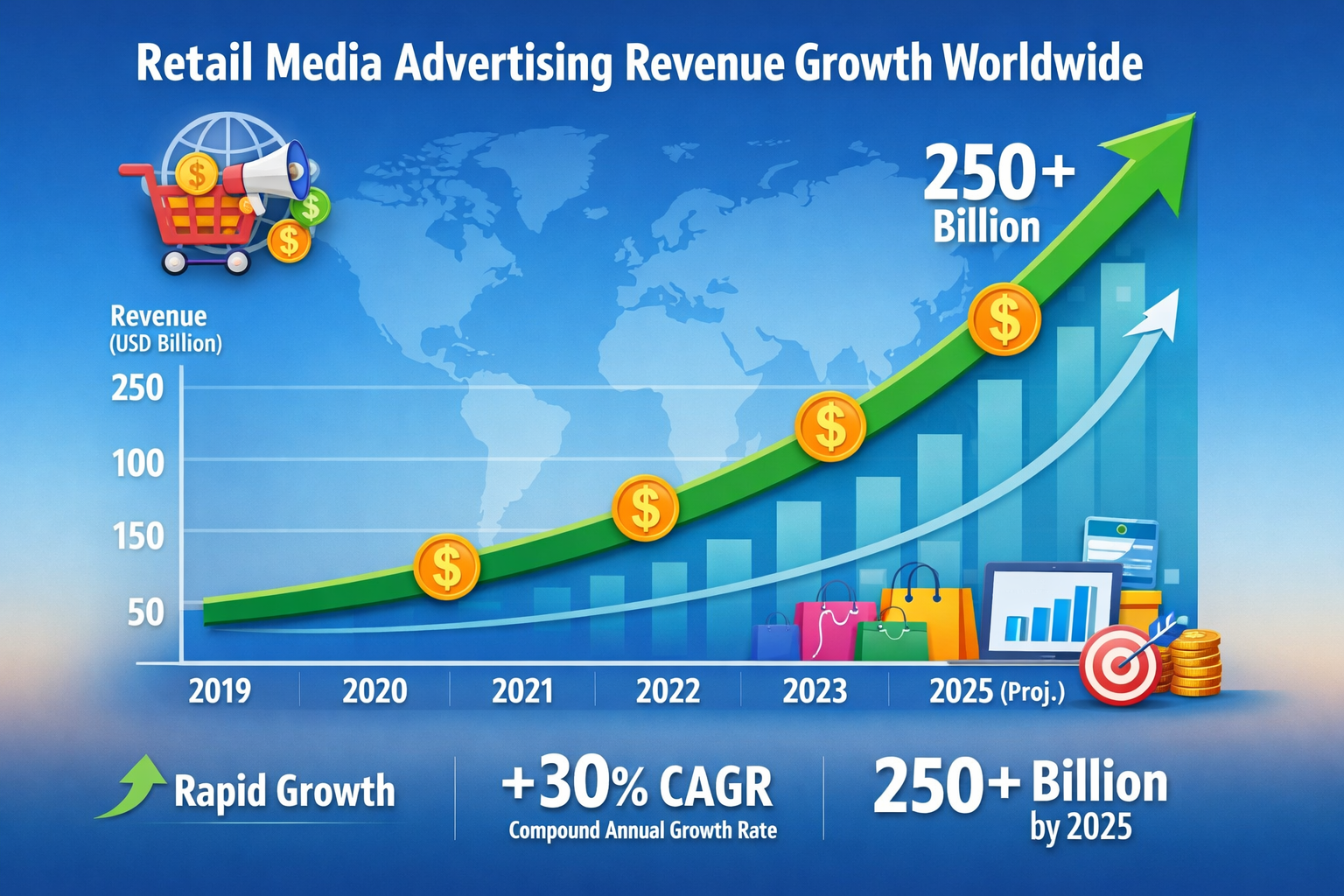
The virtual advertising environment is experiencing a significant change and the retail media is on the frontline of this change. What used to be a modest endeavor on the part of retailers to turn web traffic into revenue has today become a billion dollar business. Today, e-commerce platforms do not only sell products, they sell attention, visibility and data-based advertising solutions to brands.
With the online shopping trend becoming more popular, the retailers are discovering the great importance of their online land. Each search, each click, each purchase creates data and this data is currently being utilized to drive the most targeted advertising initiatives ever. This has made retail media one of the most rapidly expanding sources of revenue in the digital economy.
What Is Retail Media?
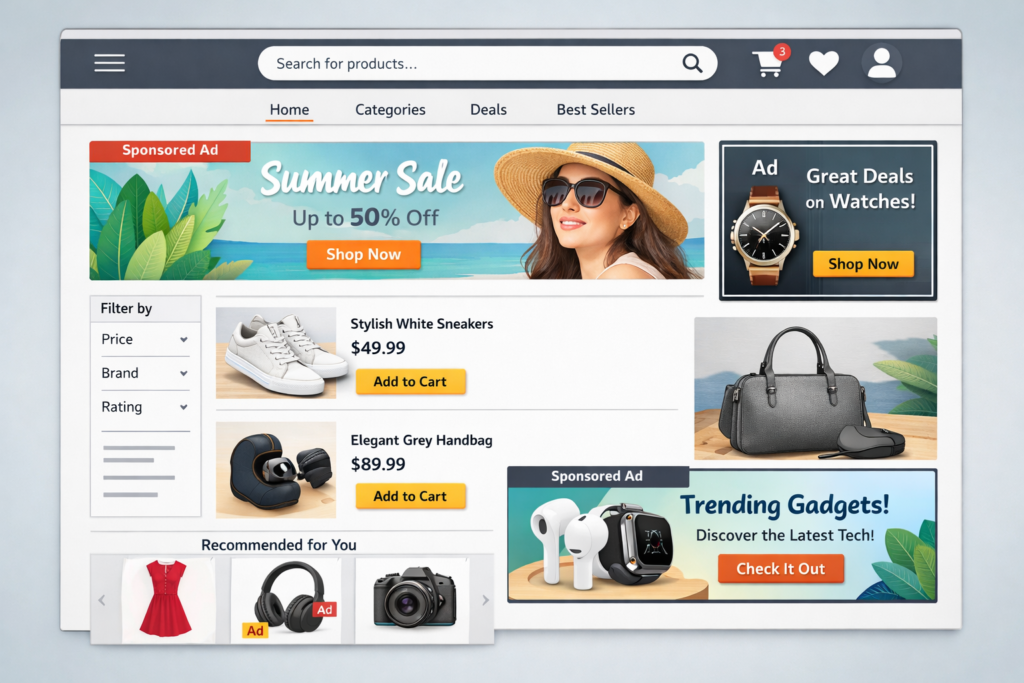
Retail media are advertisements that are shown on retailer-owned platforms like websites, mobile applications, and even connected TV settings. These advertisements are incorporated in the shopping process and are displayed in search results and product pages and recommendation boxes.
The retail media is unique in that it uses first party data. The retailers gather user insights in first-person data, such as browsing behavior, shopping history, and preferences. This enables the brands to provide more relevant and timely personalized ads.
These ads will work better compared to the traditional digital ads since they are presented at the time when the customers are already in a buying mindset. The retail media is so powerful because of this combination of relevancy and timing.
Retail Media: Why It Is Thriving.
The fast rate of growth of retail media is attributed to some major things that are transforming the advertising industry.
To begin with, e-commerce consumers have a high purchase intent. Online shoppers are also in search of products unlike social media users who might be casually surfing the internet. This increases the chances of conversion.
Second, the deterioration of third-party cookies has driven advertisers to platforms who provide quality first-party data. Retailers stand in a good position since they have direct customer relationships and data.
Third, retail media have quantifiable performance. Impression, click, and conversion tracking enable brands to optimize campaigns in real-time, enabling them to optimize them fast and efficiently.
Important Actors Generating the Trend.
Large e-commerce platforms have been leading the retail media revolution by building advanced advertising ecosystems. The platforms offer brands with platforms to run targeted campaigns and performance measurement.
At the same time, smaller and mid-sized retailers are also entering the space. They are establishing their own advertisement networks to compete and earn more money. This growth is rendering retail media more available and ubiquitous in the industries.
Innovation is becoming a necessity as competition mounts. To win over advertisers, retailers are putting money in enhanced analytics, AI-targeting, and enhanced ad formats.
Retail Media Ad types.
A range of ad formats is provided in retail media to affect customers at various points of their purchasing process.
One of the most prevalent formats is sponsored product ads, which can be found in the search results. These advertisements are mixed with organic listings and are thus less invasive.
Display advertisements on the other hand are employed in order to get attention on other pages. They assist in creating brand recognition and in advertising deals.
Video advertisements are becoming popular because they enable the brands to present products in a more interactive and captivating manner. These commercials particularly are useful in narration and illustrating product characteristics.
Retail Media advantages.
Retail media is a win-win model that provides a retailer and a brand with considerable benefits.
For Retailers
Advertising helps retailers to create an additional flow of high-margin revenue. The advertising revenue is more profitable and can be easily scaled compared to the cost of product sales that includes logistics and operational expenses.
Also, retail media enhances brand relationships. Through the premium placement and insight, retailers will be able to attract more advertising investments and long term partnerships.
For Brands
Direct access to high-intent consumers is helpful to brands. This makes the conversions more probable and enhances the overall performance of the campaign.
Retail media also increases product visibility particularly in competitive categories. Through improved positioning and targeting, brands will be able to shine and impact purchasing decisions.
Retail Media challenges.
Retail media is not without problems despite its benefits. Competition in this space is growing at a very fast rate as more brands invest in the space.
Key Challenges
- User experience being degraded by Ad saturation.
- Increased costs because of high demand.
- Absence of standardized measurement between platforms.
These issues underscore the necessity of superior strategies and instruments that can be used to promote sustainable growth in the retail media.
Future of Retail Media.
Retail media has a strong connection to technological development in the future. Artificial intelligence will significantly contribute to the enhancement of the targeting, personalization, and optimization of the campaigns.
Retailers are also investigating omnichannel approaches, integrating online and offline data to have a smooth customer experience. This will enable the brands to access consumers in various touchpoints.
Moreover, the competition will lead to innovation and better overall efficiency in the ecosystem as additional retailers implement retail media.
Conclusion
Retail media has ceased to be a niche idea and emerged as a big player in digital advertising. E-commerce platforms are transforming the way brands engage with consumers by using first-party data and high purchase intent.
To retailers it gives them a lucrative and scalable source of revenue. Brands have better targeting, visibility and performance. As the industry keeps on developing, the retail media will have an even bigger role in defining the future of advertising.
FAQs
1. What is retail media advertising?
Retail media advertising refers to advertising on e-commerce websites to reach users as they shop to promote the chances of conversion.
2. How come that retail media is developing so rapidly?
It is expanding because of the high purchasing intent, excellent first-party data and high returns than the conventional means of advertising.
3. How do retailers profit off retail media?
Retailers make money through selling ad placements like sponsored products, banners, and video advertisements to brands.
4. What are the advertisements in retail media?
Examples are sponsored listings, display ads, and video ads that are incorporated into e-commerce platforms.
5. What does the future of retail media hold?
In the future, there will be the use of AI-driven targeting, integration of the omnichannel, and growth of small retailers.